
Summary:
Singapore has transformed itself into one of the world’s most important energy trading hubs despite having no natural oil reserves. Through strategic location, world-class infrastructure, strong legal systems, and deep financial integration, Singapore controls the storage, refining, and trading of oil rather than its production. This unique model allows Singapore to benefit from global energy flows, attract multinational corporations, and maintain economic resilience, making it a dominant energy hub in Asia and a preferred base for international businesses.
Why Singapore’s Success in Energy Trading Is So Unique
At first glance, it seems counterintuitive that Singapore—a country with virtually no natural oil resources—has become a global energy powerhouse.
Most major energy hubs are built on:
- Large domestic oil reserves
- Strong upstream production capabilities
- State-owned energy dominance
Singapore has none of these. Instead, it built its advantage on:
- Strategic geography
- Infrastructure excellence
- Regulatory trust
- Financial sophistication
This makes Singapore’s energy success not just impressive—but highly intentional.
The Power of Location: Sitting at the Heart of Global Trade

4
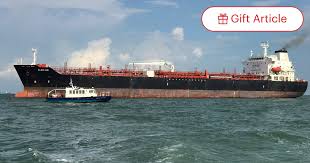
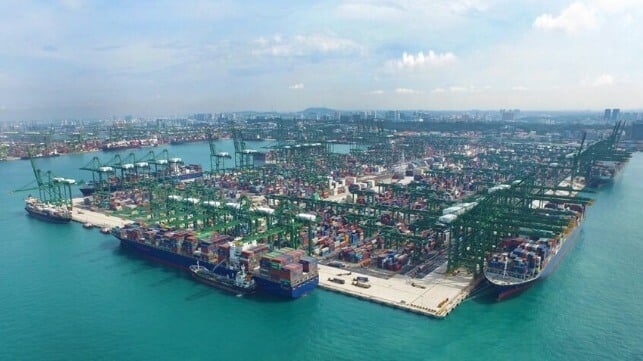
One of Singapore’s greatest advantages is its position along the Strait of Malacca.
This narrow waterway:
- Connects the Indian Ocean to the South China Sea
- Handles a significant portion of global oil shipments
- Is one of the busiest maritime routes in the world
Every day, oil tankers transporting crude and refined products pass through this corridor.
By positioning itself at this critical chokepoint, Singapore naturally became:
- A refuelling stop
- A storage location
- A trading checkpoint
Unlike countries that rely on production, Singapore profits from movement and distribution.
Building the Infrastructure: The Foundation of Dominance
Singapore’s rise was not accidental—it required decades of investment in infrastructure.
Key Developments:
- Massive oil storage terminals
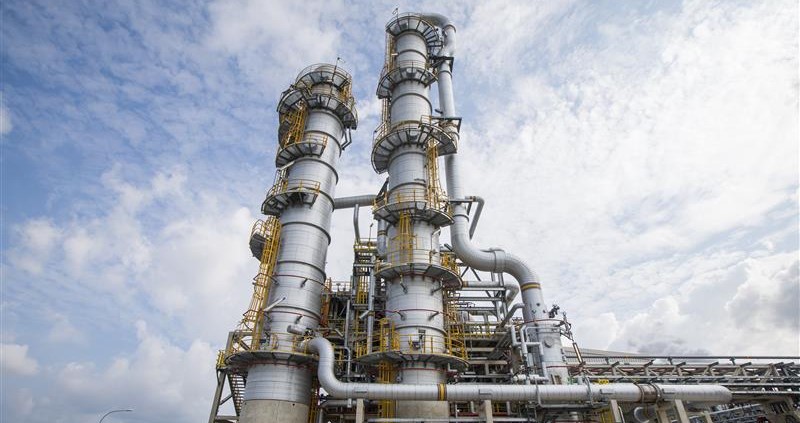
- Advanced refining facilities
- Deep-water ports for large tankers
- Underground storage such as Jurong Rock Caverns
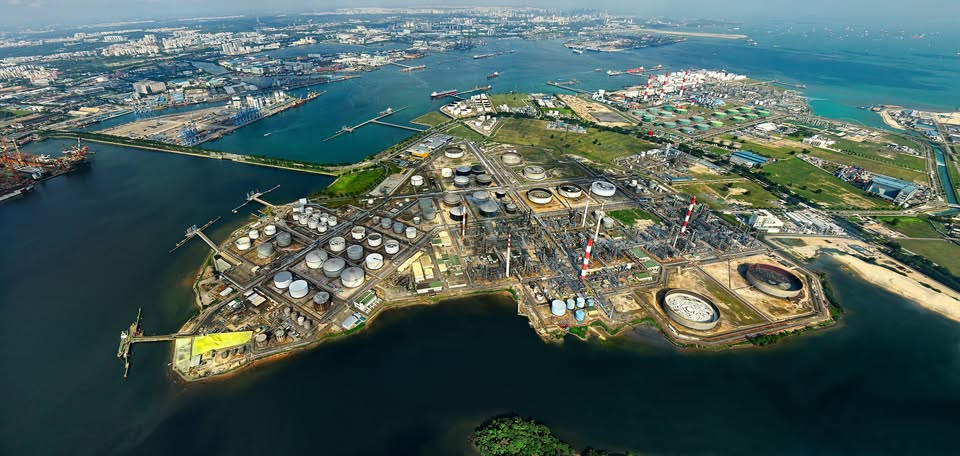
At the centre of this ecosystem is Jurong Island, a purpose-built petrochemical and energy hub.
Jurong Island: The Engine of Singapore’s Energy Ecosystem

4
Jurong Island represents Singapore’s long-term vision.
It houses:
- Refineries
- Petrochemical plants
- Storage facilities
- Energy companies
The island is designed for integration, meaning:
- Companies can share pipelines and logistics
- Feedstock moves efficiently between plants
- Costs are reduced
This creates a powerful network effect that competitors struggle to replicate.
The Role of Global Oil Giants
Singapore’s ecosystem has attracted some of the world’s largest energy companies, including:
- Shell
- ExxonMobil
- BP
These companies base their regional operations in Singapore because:
- Infrastructure is world-class
- Regulations are transparent
- Financial markets are sophisticated
Their presence further strengthens Singapore’s position, creating a cluster effect where:
- Talent gathers
- Capital flows
- Innovation accelerates
Storage: The Hidden Advantage
Unlike oil-producing countries, Singapore focuses heavily on storage capacity.
Why is this important?
Because storage enables:
- Arbitrage opportunities (buy low, sell high)
- Supply stabilisation
- Strategic reserves
Facilities like the Jurong Rock Caverns allow Singapore to:
- Store large quantities of oil securely
- Optimize land use in a land-scarce country
- Maintain flexibility during market disruptions
Storage transforms Singapore from a transit point into a control centre for energy flows.
Trading: Where the Real Value Lies

4
The real power of Singapore lies in trading—not production.
Singapore is one of the world’s leading hubs for:
- Oil trading
- Energy derivatives
- Commodity financing
This is supported by:
- Strong banking sector
- Legal certainty
- Transparent regulatory frameworks
Oil is not just physically stored and moved—it is financially traded, and Singapore is at the centre of this ecosystem.
Strong Legal and Regulatory Framework
A key reason why companies trust Singapore is its governance.
Singapore offers:
- Strong rule of law
- Transparent regulations
- Efficient dispute resolution
Contracts are enforceable, and corruption is minimal. This makes Singapore far more attractive than many resource-rich countries where:
- Regulations may be unclear
- Political risk is higher
- Legal systems are less predictable
For global traders handling billions of dollars, trust is critical—and Singapore delivers.
Integration with Financial Markets
Singapore’s energy sector is deeply integrated with its financial ecosystem.
This includes:
- Commodity financing
- Hedging instruments
- Futures and derivatives trading
Banks and financial institutions in Singapore support:
- Oil traders
- Shipping companies
- Energy firms
This creates a seamless environment where:
- Physical oil meets financial markets
- Risk can be managed efficiently
- Capital is easily accessible
Bunkering: Fueling the World’s Ships
Singapore is consistently ranked as the world’s top bunkering port.
This means:
- Ships refuel in Singapore before continuing their journey
- Large volumes of marine fuel are traded and supplied
This reinforces Singapore’s role as:
- A maritime hub
- An energy distribution centre
Countries like Malaysia and Indonesia may have natural resources, but they lack Singapore’s efficiency and scale in bunkering operations.
Why Other Countries Haven’t Replicated Singapore’s Model
Many countries in Southeast Asia have tried to replicate Singapore’s success—but few have succeeded.
Challenges They Face:
- Less developed infrastructure
- Political instability
- Weaker financial systems
- Limited integration between industries
For example:
- Indonesia has oil reserves but struggles with infrastructure and bureaucracy
- Malaysia has refining capacity but lacks trading dominance
- Vietnam is still developing its energy ecosystem
Singapore’s advantage lies in combining all elements into a single, efficient system.
Resilience During Global Crises
Singapore’s energy model also provides resilience during global disruptions.
During crises such as:
- Supply chain disruptions
- Geopolitical conflicts
- Oil price shocks
Singapore can:
- Tap into its reserves
- Adjust supply chains
- Maintain trading activity
This ensures:
- Economic stability
- Investor confidence
- Business continuity
The Strategic Mindset: Control vs Ownership
Singapore’s strategy can be summarised in one key idea:
It is better to control the flow than to own the resource.
Instead of focusing on:
- Oil exploration
- Production
Singapore focused on:
- Storage
- Refining
- Trading
- Distribution
This allows it to benefit from global oil flows regardless of where oil is produced.
Transitioning into the Future of Energy
As the world moves towards renewable energy, Singapore is adapting.
It is investing in:
- Liquefied natural gas (LNG)
- Hydrogen
- Carbon trading markets
- Renewable energy trading
However, its existing infrastructure remains valuable because:
- Oil and petrochemicals will still be needed
- Energy trading will continue
- Logistics and storage remain critical
Singapore is positioning itself as a multi-energy hub, not just an oil hub.
Why This Matters for Businesses and Investors
Singapore’s energy ecosystem offers several advantages for businesses:
1. Stability
Reliable energy supply reduces operational risks.
2. Strategic Location
Easy access to regional and global markets.
3. Strong Ecosystem
Integration of logistics, finance, and trading.
4. Investor Confidence
Stable regulatory and legal environment.
This is why many multinational companies choose Singapore as their regional headquarters.
Conclusion: A Masterclass in Strategic Positioning
Singapore’s rise as Asia’s energy trading hub is a masterclass in strategy.
Without producing a single drop of oil, it has:
- Built world-class infrastructure
- Attracted global energy giants
- Integrated finance with logistics
- Positioned itself at the centre of global trade
While other countries rely on natural resources, Singapore relies on systems, efficiency, and trust.
In doing so, it has proven that in the modern economy, control over the value chain is more powerful than ownership of raw resources.
This is what makes Singapore not just an energy hub—but a global economic powerhouse.